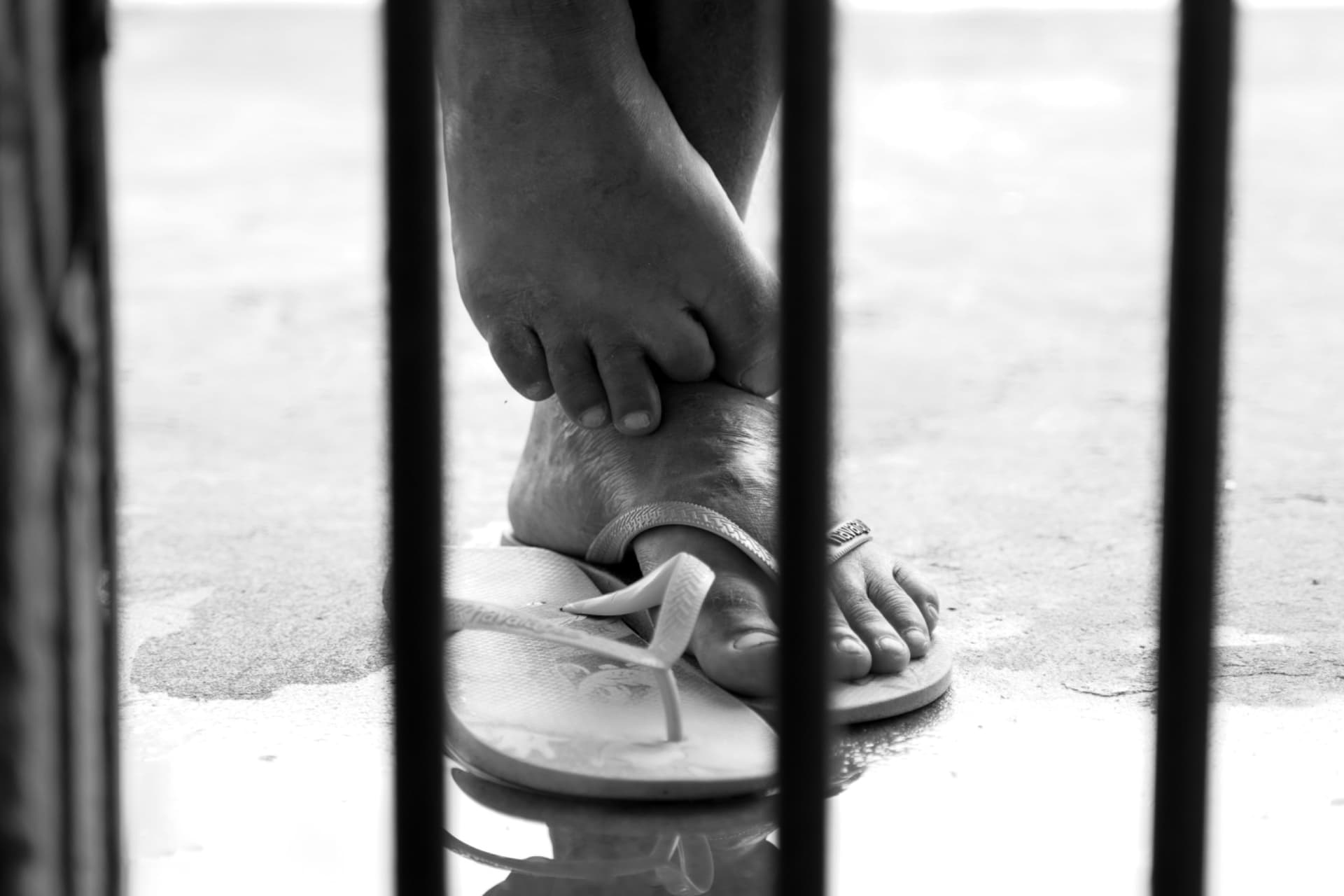
Presence is commitment.
The science that transforms is not the one that arrives first, but the one that stays.
Being present where life is most difficult requires time, listening, and a genuine willingness to understand what numbers alone do not reveal.
Equity is born from constancy.
From being there, returning, insisting, and caring.
Justice is not built on brief visits, nor is transformation produced from a distance.
It is built when science decides to remain, listen, and learn from those who live the reality it seeks to change.
But being present is not just about arriving, it's about belonging.
And belonging is built with trust.
Nothing is more justified than the distrust of those who have always been forgotten, or worse, of those who have been used so many times and then left behind.
Therefore, trust is not asked for, it is earned.
It is the most fragile link and, at the same time, the most essential for equity in action.
In many territories, what is lacking is not technology, but continuity.
It's not resources, it's presence.
And presence is not improvised: it is built, cultivated, and renewed over time.
Science is only complete when it is willing to stay long enough to understand and humble enough to change alongside.
Because equity is not a result, it is a daily practice.
Science needs to remain where it is most difficult. Because that is where it matters most.
Being present is harder than it seems.
Belonging, even more so.
Because truly being present means feeling the weight of what one sees, it means confronting a world that, once known, should no longer exist.
It is seeing someone's body waste away due to the absence of a medicine discovered centuries ago.
It is witnessing the silence of those who fall ill without diagnosis, without resources, without hope, and yet are grateful for the bare minimum.
It is hearing the gratitude of those who call 'care' what, anywhere else, would be basic.
And it is feeling the pain of knowing that what separates this life from a full life is merely the distance between evidence and access.
Science, when it reaches these places, does not find numbers.
It finds people struggling to exist.
And it is there that knowledge ceases to be theoretical and becomes moral.
Because after seeing, understanding, and measuring, comes what is most difficult: staying.
Staying in the face of discomfort, powerlessness, and the persistent question: how can we accept that this still happens?
Belonging to a place where vulnerability is the rule requires more than technique; it requires humanity.
And those who see up close what most will never see carry forever the certainty that science needs to do more, be more, be present more.
Equity begins when knowledge refuses to be a spectator.
Science for what? For whom?
What, after all, is the true reason for doing science?
To solve problems or to create them?
The science that was born to transform the world often seems more concerned with perfecting it where it already works.
We live in a time when the extraordinary is celebrated and the essential is forgotten.
Resources are concentrated at the frontiers of innovation, while what is simple, proven, and urgent still fails to reach those who need it most.
There are vaccines that prevent, medicines that save, diagnoses that have existed for decades, but which have not yet crossed the distance between the laboratory and real life.
Science lacks the courage to step out of the controlled box, where everything is predictable, measurable, and ideal.
It lacks the willingness to live what is studied, to err and learn in the unstable terrain of reality, where equity is tested every day.
Perhaps we don't lack more innovation.
Perhaps we lack action and compassion.
Because genius that does not commit to what is human is useless.
Science needs to return to looking at the ordinary, at what is simple, at what truly changes lives.
True innovation is not in the unprecedented, it is in what finally arrives.